
The NuDay standard
Knowledge
before
confidence.
30+ years
of perspective.
Training that takes safety, law, and personal responsibility seriously.
About us
Built for
responsible
gun owners.
NuDay Arms Training LLC conducts the training required for a Concealed Weapon Permit. Participants who complete all classroom and range training receive a certificate of completion for submission to the Sheriff's Office for their Carry Conceal Permit.
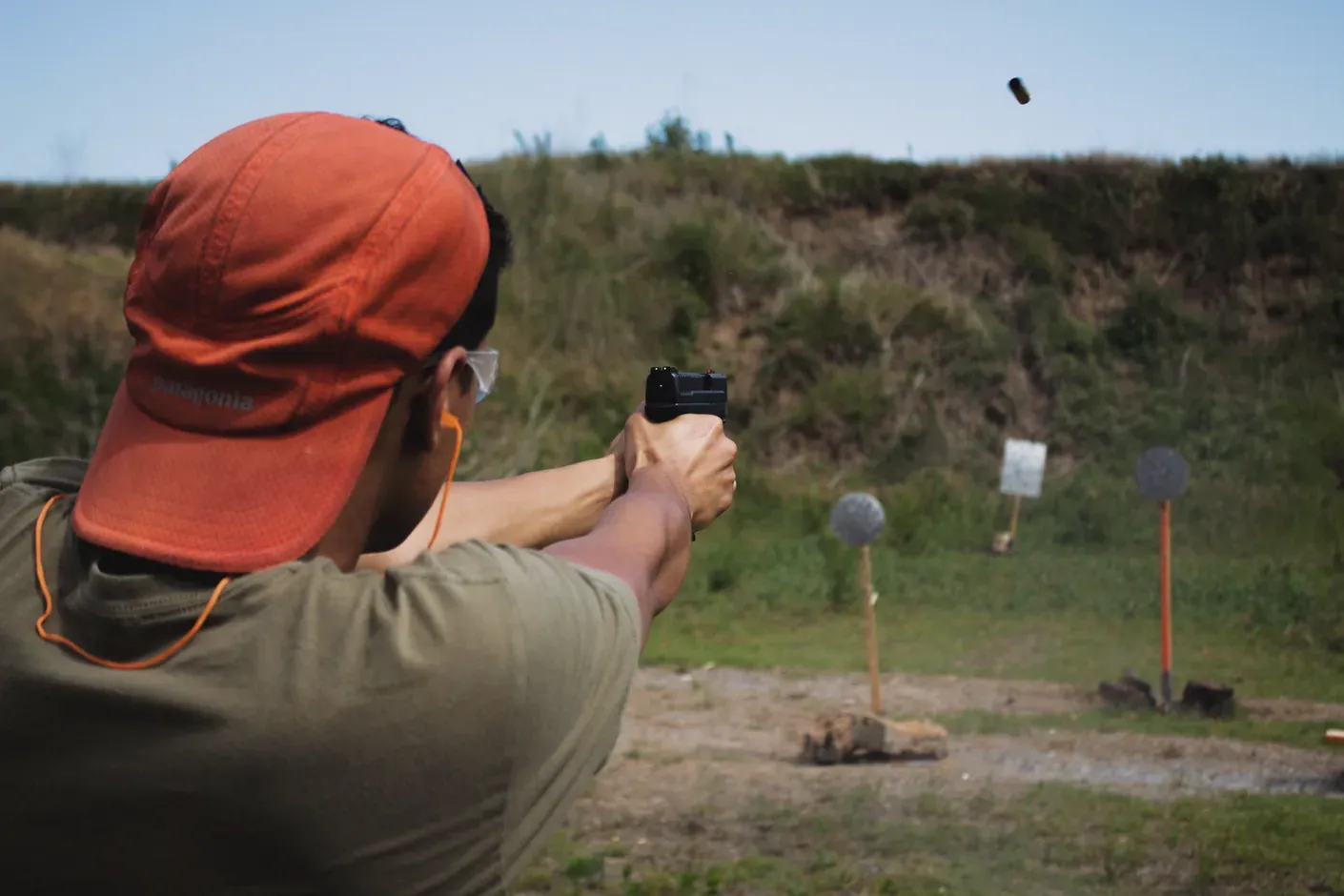
Our classes are comprehensive: developing comfort with firearms while understanding the ramifications of carrying and using one. Using Total Participant Involvement, the basic courses provide hands-on learning in safe firearm handling, firearm parts and operation, ammunition, shooting fundamentals, and range skills.
Your instructor
AC
Johnson
AC studied Criminal Justice and Political Science at North Carolina State University. He is a certified and licensed North Carolina Basic Pistol Instructor, Shotgun Instructor, and Range Safety Instructor.
AC has more than three decades of experience as a North Carolina Specialized Law Enforcement Firearms Instructor, serving in both full-time and reserve-time roles. His NCDOJ Specialized Law Enforcement Firearms Instructor service spanned 1993–2016. His approach centers on safety, knowledge, practical skills, and personal safety and defense.
Credentials
- NCDOJ Certified CCH Instructor
Full 8-hour CCH classroom education and mandatory live-fire range qualification. - NRA Certified Instructor
Pistol, Shotgun, and Range Safety Officer. - NCDOJ Specialized Law Enforcement Firearms Instructor
1993–2016, training officers in firearms, use of deadly force, and safety protocols. - HB 193 compliance education
Certified to provide initial CCH and annual NRA pistol safety training.
Our mission
Educate.
Equip.
Protect.
To educate and equip each student with the aspects of North Carolina Concealed Carry Handgun Law as it applies to a citizen's rights, and to teach and apply the fundamentals of safety and basic marksmanship.
Objectives
- Demonstrate proficiency in safe handling, loading, unloading, storing, securing, and firing the handgun.
- Identify places that handguns may not be carried even if the individual has a CCH permit.
- Identify the major parts of a revolver or semiautomatic pistol.
- Demonstrate proficiency in marksmanship fundamentals.
- Explain North Carolina Common and Statutory Law on when deadly physical force would be justifiable.
CCH essentials
The permit
in plain terms.
Eligibility: Applicants must generally be 21 or older, U.S. citizens or permanent residents, North Carolina residents, and legally eligible to possess a firearm. The Sheriff's Office conducts background and mental health checks.
Training: North Carolina requires an approved eight-hour class, including two hours on legal issues and the use of deadly force, plus a written test and handgun range qualification.
Validity: A permit is valid for five years from the date of issuance. Apply through the Sheriff of your county of residence.
Renewal and address changes: Contact your county Sheriff's Office before expiration and notify the office of any change in permanent address within the required period.
Carrying in North Carolina
Know your
boundaries.
A CCH permit is not blanket authorization to carry everywhere. North Carolina and federal law restrict carry in specified places, including certain educational property, law enforcement or correctional facilities, some government offices, and premises where a person in control has posted a prohibition. Check the statutes and local requirements before carrying.
Restricted places
Schools, government offices, courthouses, law enforcement facilities, and other locations restricted by statute.
Alcohol & events
A valid CCH permit may allow concealed carry at an establishment where alcohol is sold and consumed unless the premises is posted to prohibit it. Carrying while consuming alcohol or while any alcohol remains in your body is prohibited. Check current statutes and posted restrictions.
Private property
A private owner may prohibit firearms. Pay attention to signage and notice, and ask questions when in doubt.
See G.S. 14-269.3 and G.S. 14-415.11. North Carolina firearms law can change. This is general education, not legal advice; confirm current requirements with the appropriate authority.